Call center agents spend hours every day with a headset on. The quality and comfort of that device has a direct impact, not just on the agent's physical wellbeing, but on the actual quality of service the customer gets on the other end of the line.
Why wired headsets hold agents back
A wired headset limits movement. Reaching for a document, checking with a supervisor, or just stretching means taking the headset off and risking losing context in the call. It sounds minor, but it adds up into a real productivity drag in a high call volume environment.
The benefits of going wireless
- Mobility: agents can move around within a certain range of their desk while staying connected to a call, grabbing a document or a quick word with a colleague, for example
- Long-term comfort: modern designs are lighter and more ergonomic for hours of use without a cable getting in the way
- Clear audio quality: noise-cancelling matters a lot in a busy call center environment, keeping the agent's voice clear on the customer's end despite background noise
- Works with your existing IP PBX: modern headsets integrate directly with the IP phone or softphone already in use, no extra adapter needed
What to look for when choosing one
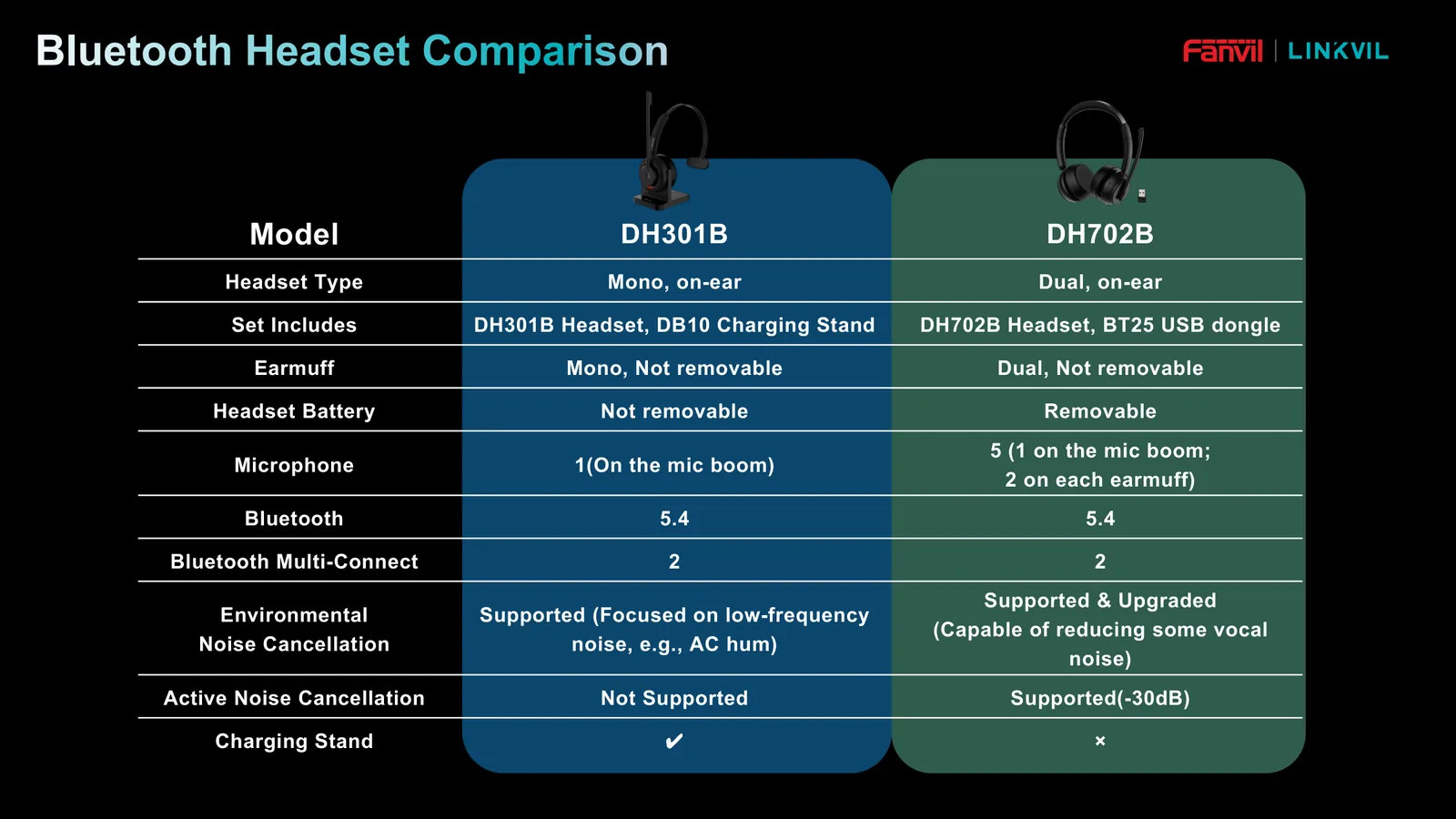
For a call center environment, prioritize a headset with a solid noise-cancelling microphone, long battery life for full shifts, and direct compatibility with the phone system already in place. From the Linkvil line, for example, the DH301B is a mono on-ear headset with ENC noise reduction and a charging stand, while the dual-ear DH702B adds Active Noise Cancellation down to -30 dB and a replaceable battery, a good fit for a noisy call center floor. Both use Bluetooth 5.4 with dual connection, so one headset can pair with an IP phone and a mobile at the same time, plus a plug-and-play USB dongle with no complicated setup.
Part of a bigger communication ecosystem
Wireless headsets work best as part of a fully integrated communication setup, IP PBX, an IP phone at every desk, and the headset itself, all configurable and manageable from a single system.
Looking to upgrade your call center team's equipment?
Tell us your agent count and current system, and our team will help find the right fit.