When designing door access control, one of the first decisions is how people open the door. Fanvil supports several methods, and often a combination of methods is the best choice.
RFID card: practical and common
Card access (for example through the i602V device or the EC20 module) is practical for offices and buildings with many users. Cards are easy to issue and revoke through the FCMS cloud. The downside is that cards can be lost or shared.
PIN keypad: no extra device
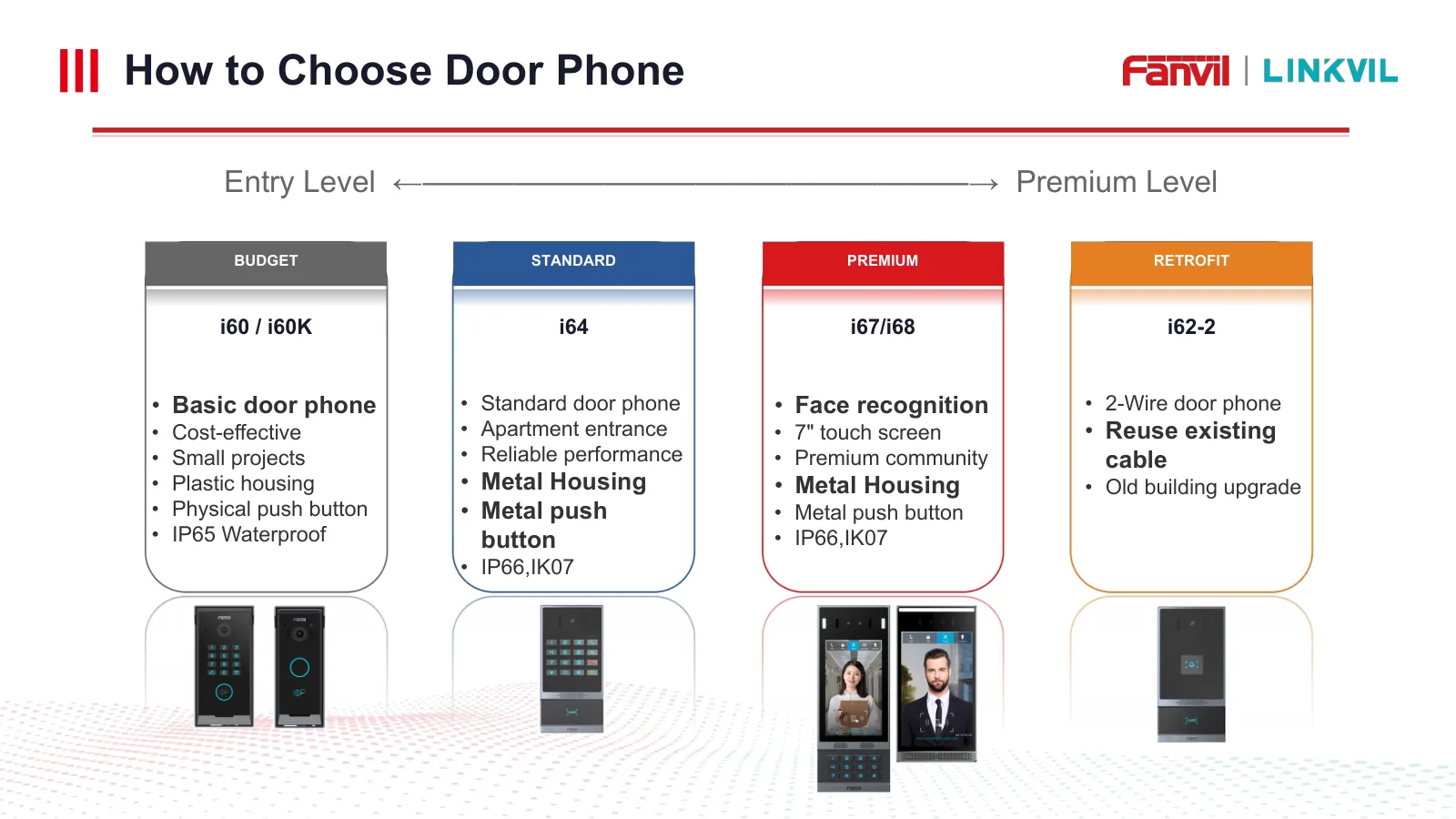
A keypad (such as the i60K or i602K) allows access through a PIN code without carrying a card. It suits secondary doors or temporary access. Good security practice matters here, such as rotating the PIN periodically.
Face recognition: touchless and hard to fake
Premium door phones like the i67 and i68 support face recognition with a 7-inch touchscreen. Touchless access speeds up foot traffic, reduces reliance on cards, and gives more accurate access logs, a fit for premium communities or offices.
A combination is often best
Many projects use more than one method: face recognition at the main door, cards for employees, and a keypad for secondary doors. All can be managed from one FCMS dashboard. For the full architecture picture, read Fanvil door access control.
Need a Fanvil solution for your project?
Talk to our team about the specific needs of your project.