Bathrooms are one of the highest-risk areas for elderly patients, slippery floors, tight spaces, and often a place where a fall goes unnoticed for a while. A regular, non-waterproof panic button clearly isn't the right fit for a space like this.
Why bathrooms need a dedicated solution
Unlike a bedroom, bathrooms deal with constant water and humidity exposure that can quickly damage standard electronics. On top of that, in an actual emergency like a fall, a patient might not be able to reach a button that's mounted too high or too far from the floor.
What does an IP65 rating actually mean?
IP65 is a standard for resistance to dust (dust-tight, the digit 6) and water (protected against water jets from any direction, the digit 5). This is different from IP67, which is rated for full submersion. IP65 is built specifically for areas with constant water spray and splashing, like bathrooms, rather than being fully submerged.
Types of emergency buttons for the bathroom and the room
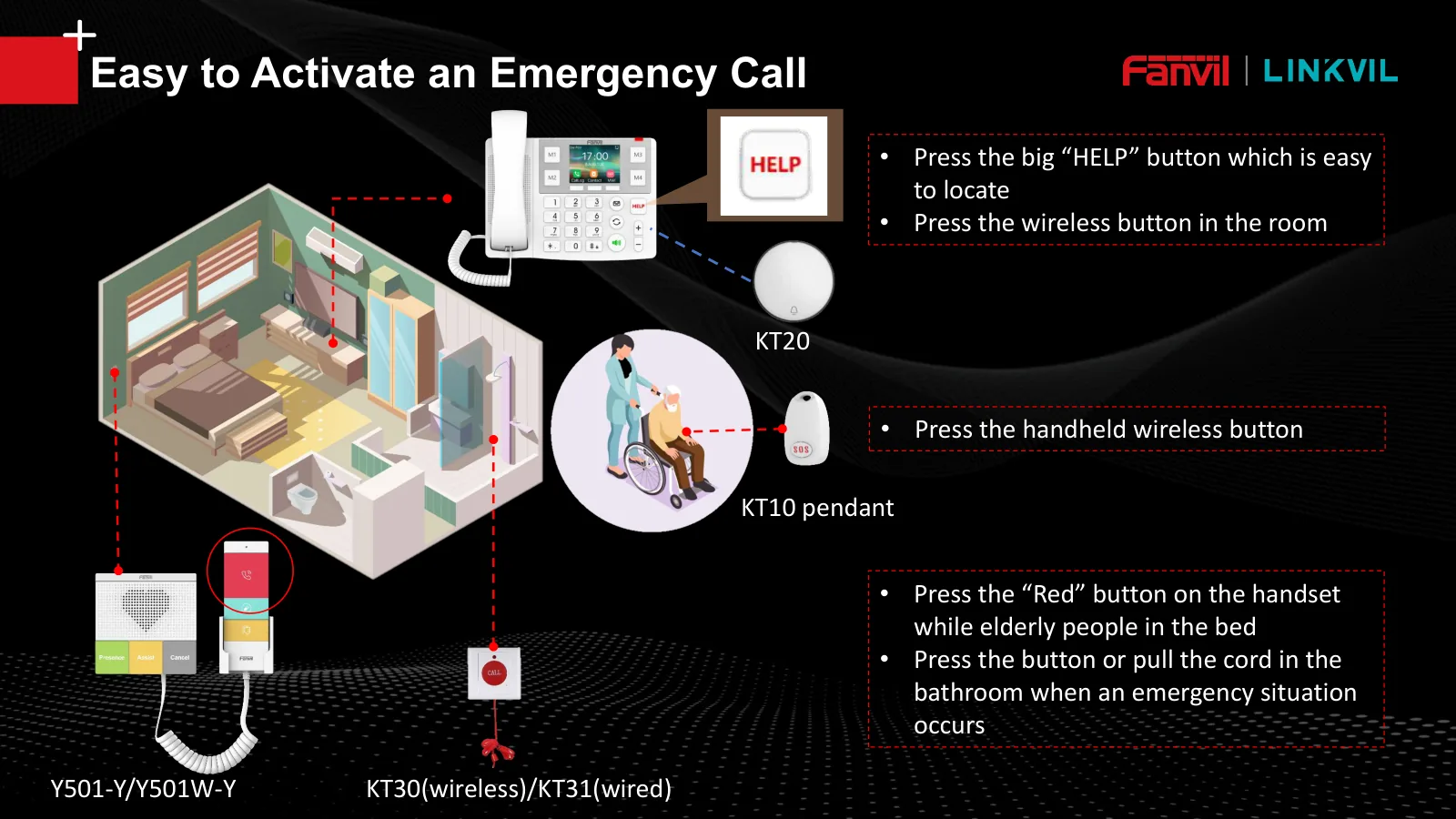
- Wireless pull-cord button (KT30): a cord that hangs down close to the floor, designed so a patient who's fallen can still reach and pull it even while lying down. IP65 rated, running on 433MHz wireless with a range of 6 to 25 meters indoors.
- Wired pull-cord button (KT31): a wired option with a 2-meter pull cord and an IP44 rating, good for a more permanent, simpler installation.
- Portable wireless button (KT10/KT20): a button the patient can wear as a pendant or hold, self-powered so it needs no battery, ideal to carry around inside the room.
How it connects to the nurse call system
These emergency buttons connect directly to the same nurse call system. The moment one is pressed, the signal goes straight to the corridor light and nurse console, triggering the highest priority level above a regular call. Through the X305 big-button IP phone, an emergency call can even be forwarded to up to 8 numbers in sequence until it is answered. For elderly care facilities, installing this in every bathroom is one of the cheapest safety investments with the biggest payoff. Learn more about how a nurse call system works.
Want to add emergency coverage to your bathrooms?
Tell us how many install points you need, and our team will help you plan it.