At a lot of hospitals and clinics, patients still call for a nurse by shouting or pressing a basic buzzer that lights up somewhere in the hallway. The problem is that a nurse needs to know exactly which room is calling, how urgent it is, and be able to respond quickly even while handling another patient. A nurse call system is built specifically to fix this.
What is a nurse call system?
A nurse call system is an integrated IP/SIP-based communication system that connects patients directly to the nurse station in real time. When a patient presses the call button, the system immediately shows the room and bed number on the nurse station screen, with different colors and ring tones depending on how urgent the call is. Because it runs on IP, it uses ordinary network cabling (CAT5) and can be expanded at any time without pulling dedicated wiring.
The main components
A Fanvil Nurse Call System is built from several connected devices. Here are the core components and the models typically used:
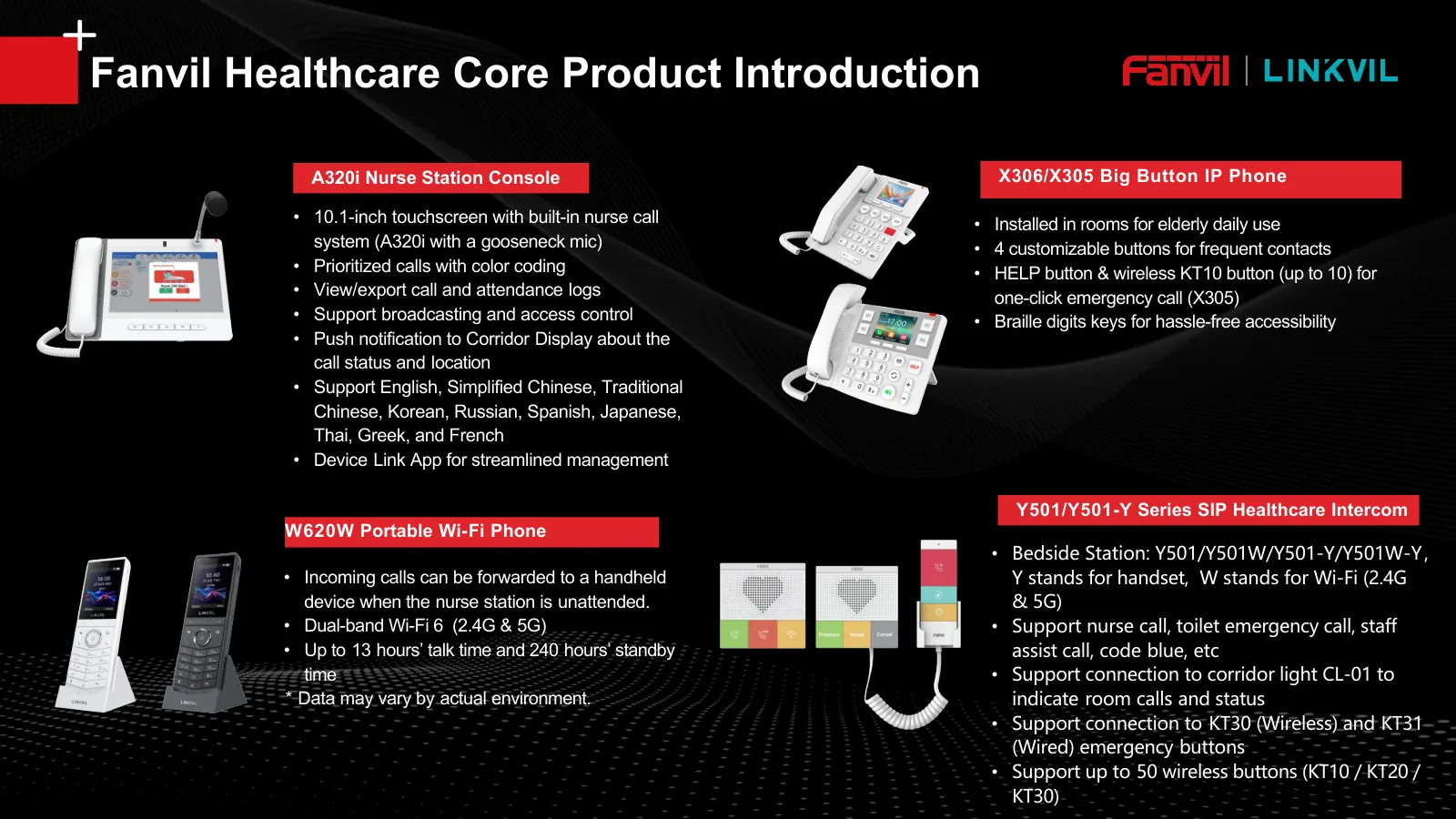
- Nurse station console (A320i): the central unit at the nurse station with a 10.1-inch touchscreen. It shows every incoming call with its location and priority color, manages up to 100 IP devices in one system, and stores call and staff attendance logs for auditing.
- Bedside station (Y501 series): the intercom next to the patient's bed for two-way communication with nursing staff. The Wi-Fi variant (Y501W) makes it easy to install in rooms that are hard to cable.
- Big-button IP phone (X305/X306): a phone with a large HELP button and Braille digits, designed so elderly residents can press it easily in an emergency.
- Wireless emergency buttons (KT10/KT20/KT30): portable buttons a patient can wear as a pendant or press from inside the room. For the bathroom there is also a KT31 pull-cord button that resists water splashes.
- Corridor light (CL-01): an indicator light above the room door that glows red, green, blue, or yellow based on call status, so staff spot the right room fast without checking a screen. For larger areas, the CMD-01 corridor display shows call text and messages.
- SIP speaker (A201/A212): a speaker that alerts nurses when the nurse station is unattended, powered over the network cable (PoE).
Call types and color codes
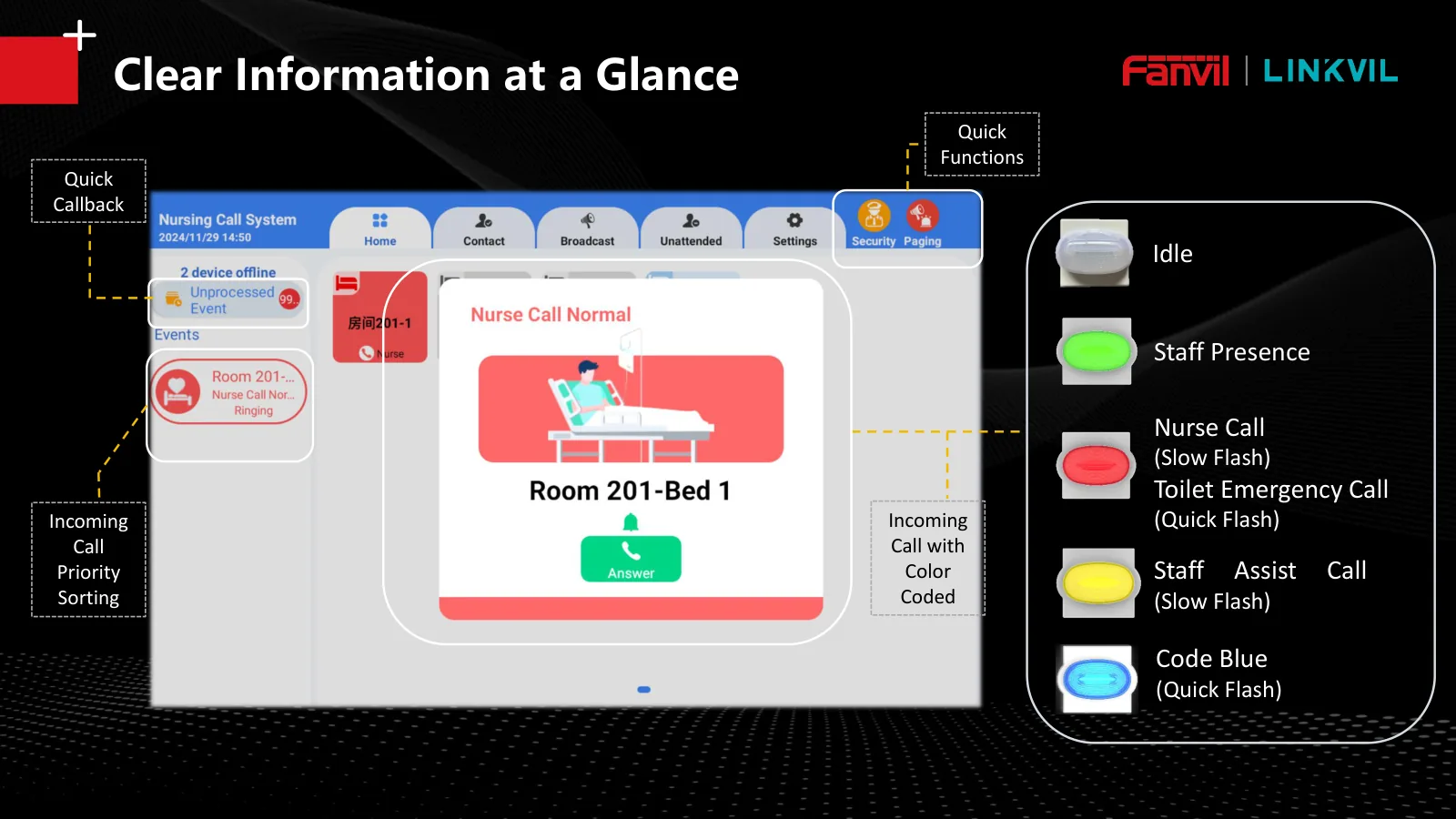
What sets a nurse call system apart from a basic buzzer is its ability to distinguish the type and urgency of a call through consistent color codes:
- Nurse Call (red, slow flash): a routine call from a patient who needs a nurse's help.
- Toilet Emergency Call (red, fast flash): an emergency call from the bathroom, given higher priority.
- Assist Call (yellow): a nurse requesting extra help from a colleague while attending to a patient.
- Code Blue (blue, fast flash): a critical situation requiring an immediate medical team response.
Every call is automatically sorted by priority on the nurse station screen, so the most critical case always appears at the top. We cover how the corridor lights work in a separate article on the corridor light system for faster nurse response.
How emergency calls are guaranteed to be answered
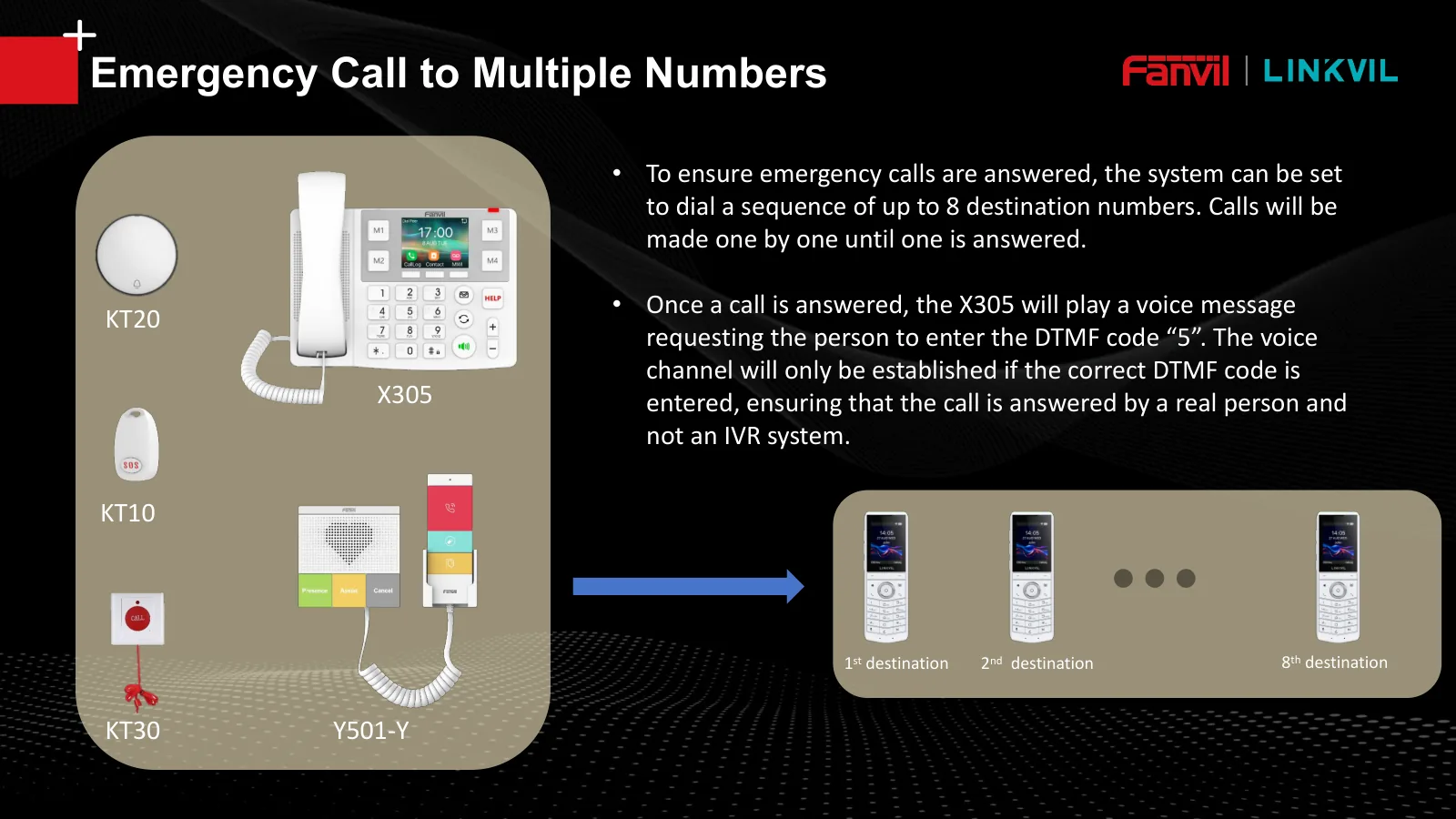
An emergency button is useless if the call goes unanswered. That is why, when the button is pressed, the system can be set to dial up to 8 destination numbers in sequence until one is answered. Once answered, the recipient is asked to enter a confirmation code (DTMF) before the voice channel opens. This ensures the call is answered by a real person, not a voicemail box or answering machine. If it is not confirmed, the call is immediately forwarded to the next number.
Why modern hospitals need this
Modern hospital accreditation standards, including facilities pursuing international accreditation, increasingly require documented, fast emergency response systems. A nurse call system delivers three key benefits: faster response because nurses immediately know the location and urgency of a call, lower workload since manual room checks are no longer necessary, and automatic documentation because every call and its response time is logged for audits and quality evaluation.
Not just for large hospitals
This kind of system matters just as much for clinics, nursing homes, and elderly care facilities, even scaling down to home-based care. Fanvil Nurse Call System is built modular, so it can scale from a one or two room setup all the way to a large hospital with hundreds of rooms, all on the same IP/SIP protocol. If you want to see the full sequence from a patient pressing the button to a nurse responding, read how a nurse call system works.
Considering a nurse call system for your facility?
Tell us your room count and specific facility needs, and our team will help you plan it.